Professionalising the Early Childhood Workforce in Northern Ireland: Major Report

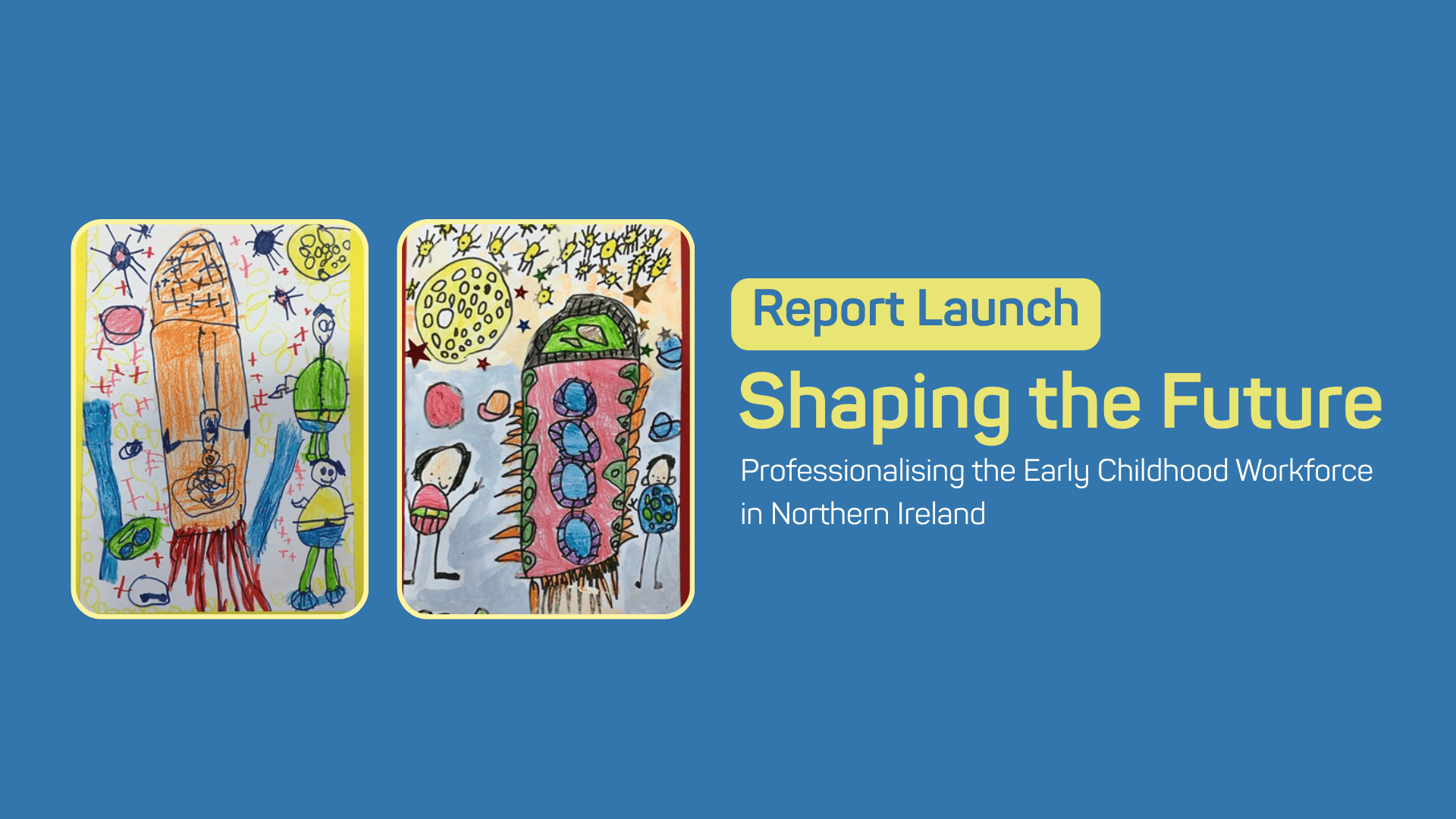
Stranmillis University College hosted a special event on Wednesday 11 March 2025,  launching the Northern Ireland findings of a major UK-wide research report, It IS Rocket Science: Professionalising the Early Childhood Workforce, to policymakers, practitioners and researchers. 

Funded by the Nuffield Foundation, the landmark four-nation study examined the status, structure and challenges facing the early childhood workforce across the UK. 

The event began with a light lunch in Craigantlet in the Refectory Building before the main programme took place in the Slemish Room. Following a welcome by Prof. Heggarty, Principal of Stranmillis University College, gifts were presented to Jude McQuaid and Logan McCusker, two nursery-aged boys whose rocket drawings were selected to illustrate the study’s final report, “It’s Rocket-Science.” and the presentations shared during the event. The boys’ teacher, Mrs McKeagney, was also recognised for her support and guidance along the way.  

The attendees then heard from the Chief Executive of Early Education, Beatrice Merrick, followed by Prof. Verity Campbell-Barr, Principal Investigator of the study, who introduced the wider project and outlined its key findings. 

Dr Glenda Walsh, Head of Doctoral Studies and Early Years Education at Stranmillis University College, then presented the Northern Ireland findings. Drawing on interviews and focus groups with stakeholders across the sector, Dr Walsh’s presentation highlighted both the strengths of the Northern Ireland early childhood workforce and the structural challenges facing the sector. 

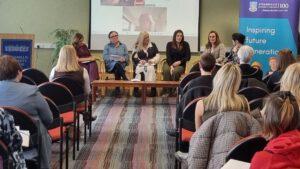
The event concluded with a panel discussion featuring leading experts: Tina Dempster (Department of Education), Pauline Walmsley (Early Years), Sheelagh Carville and Suzanne McCartney (Stranmillis University College), and Aileen Colgan (Southern Regional College), exploring the findings’ implications and next steps for strengthening the early childhood workforce in Northern Ireland.  

With the draft Early Learning and Childcare Strategy currently under consideration in Northern Ireland, speakers noted that the study provides an important evidence base to inform future policy and support the development of a stronger, more sustainable early years workforce.  

The proceedings were formally closed by Professor Noel Purdy, Director of Research and Scholarship at Stranmillis University College. 

To find out more about the research, click here

Driving Innovative Practice Through Partnership in Primary Science

As part of their Playful Approaches to Science module, Year 3 and 4 BEd students have worked in partnership with staff from St Anne’s primary school, Belfast to deliver meaningful, hands-on, and purposeful science lessons.

Since October, the students have engaged with children from Nursery to Primary 7 delivering extended playful science topics including Celebrations, Autumn, Titanic and Dynamic Earth.

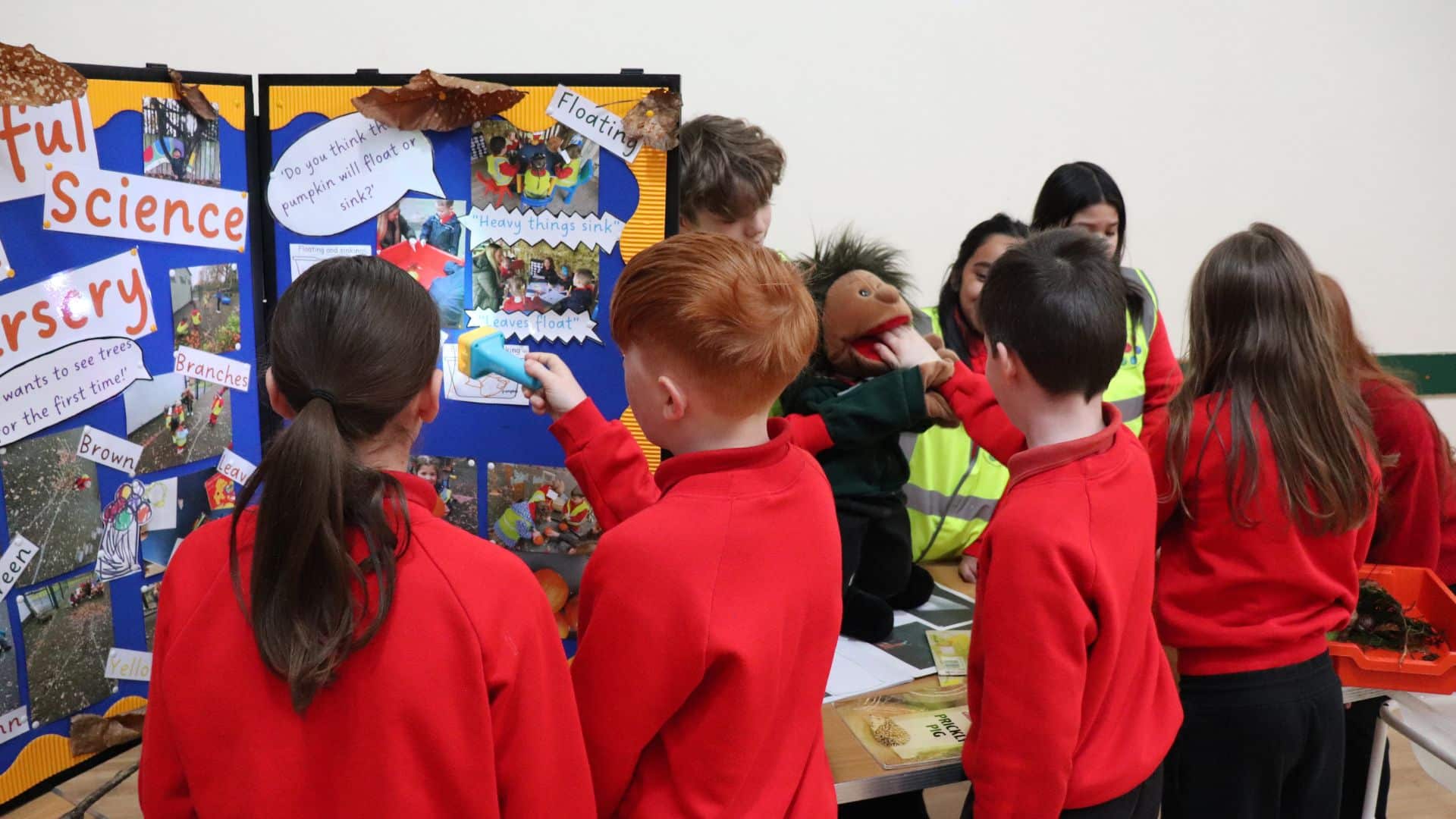
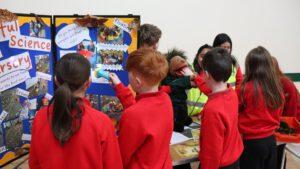
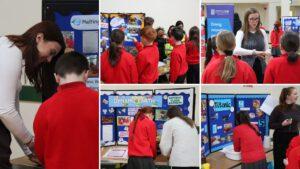
On 29 January 2026, the partnership culminated in a Science Showcase event hosted at St Anne’s PS. This provided an opportunity for the student teachers to share their practice with staff and children from across the entire school. They created interactive displays including practical demonstrations used in their lessons.

Supported by their trusty pupil helpers, the student teachers offered an engaging taster of playful science. The screams, laughter and thoughtful questions throughout the day reflected the enthusiasm, excitement and enjoyment shared by children and adults alike. Children tried to escape the Titanic, became Marvel Masters by using their senses to identify mystery objects, blew up balloons using vinegar and baking soda, and explored floating and sinking with the help of Ali the puppet.

A BEd 3 student reflected on her experience of the event: “[The showcase] was a great experience, highly valuable and something I will take into future practice!”

Josephine Mallon, Vice Principal of St Anne’s, had this to say about the partnership:

“Our long‑standing partnership with the Science Department at Stranmillis University continues to be mutually beneficial and deeply valued within our school community. The science students who visit bring with them a wealth of subject knowledge, supported by tutors who are both passionate and playfully engaging. This combination benefits not only our pupils, who are always excited for their visits, but also our teaching staff. Sessions are consistently well prepared, and the reflective conversations that take place between visits contribute directly to the high‑quality learning experiences our pupils receive.”

The collaboration has encouraged us to further develop our use of scientific language and strengthen the teaching of key scientific skills. In particular, it has helped us refine our approach to inquiry‑based learning and adopt more playful, curiosity‑driven methods in the classroom.

They have supported us in reviewing and updating our science planning and have played a significant role in reigniting our enthusiasm for the subject. The impact was especially evident during the recent Science Fair, which served as a vibrant showcase of the partnership’s success. The hall was buzzing with excitement and intrigue as pupils engaged with hands‑on activities and shared their discoveries. A particular highlight was where our pupils, paired with their science teaching student, took great pride in acting as experts at their own stalls. The sense of ownership, confidence, and joy they displayed while sharing their learning with peers and visitors was remarkable. The event also created meaningful opportunities for different year groups to come together and celebrate science collectively.

It is a privilege to work with Stranmillis University. This partnership enriches our curriculum, inspires our staff, and brings extraordinary learning experiences to our pupils. We look forward to continuing this collaboration and building on its many strengths in the years ahead.”

 A P5 teacher from St. Anne’s valued the coteaching experience: “Having a science student take the lead in our P5 lessons made a real difference to the children’s experience while we were learning about the human body. She planned and delivered practical activities that the children absolutely loved. They were fully involved from start to finish. The pupils responded well to the practical approach. Whilst she was leading the session, I was able to step back and watch how engaged the children were. They were curious, focused and excited to take part. The class benefited from having another adult who could guide them, answer questions and support their discussions as they worked. We really appreciate the partnership between Stranmillis and our school, and the children greatly benefit from it.”

Anna from Primary 6 enjoyed the Science Showcase: “We got to wear gloves, hats, bandanas and pin badges to attract people to our science stand. I really liked helping the other pupils to understand, especially the P3 pupils. It was like being a teacher and was lots of fun.”

Clodagh and Faye from Primary 3 too, enjoyed being teachers: “We loved it! We had a book with all our work and photos in it. We were asked lots of questions by P3, P4, P5, P6 and even P7 pupils, the oldest pupils in our school – We were the experts. We love learning about science.”

In the next stage of the project the teachers and student teachers will continue to embed playful approaches into their own science lessons independently and will share their experiences and reflections later in the school year.

Dr Andrea Doherty and Dr John McCullagh would like to extend their sincere thanks to all the staff at St. Anne’s PS for their hard work and dedication throughout this partnership. Their support, expertise and enthusiasm greatly enriched the experience, inspiring both Stran students and tutors alike. They would also like to acknowledge the Senior Leadership Team at St. Anne’s, whose guidance and commitment ensured the project ran smoothly. Their encouragement and leadership strengthened the confidence of the student teachers and enhanced every stage of the programme. A special word of thanks goes to the wonderful pupils, who reminded us all why we are so passionate about education.

Finally, to the Stran students — you have made the Science Department immensely proud. Your enthusiasm, creativity and teamwork demonstrate the powerful impact that a dedicated group of educators can make.

Technology and Design in NI Needs Clearer Vision to Support Future Workforce, New Report Warns

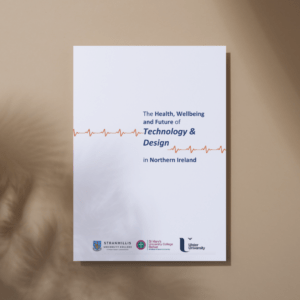
A new report examining the health, wellbeing and future of Technology and Design (T&D) in Northern Ireland has highlighted the subject’s critical role in preparing young people for the skills needed in a rapidly evolving economy. 
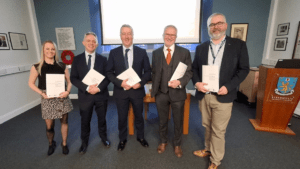
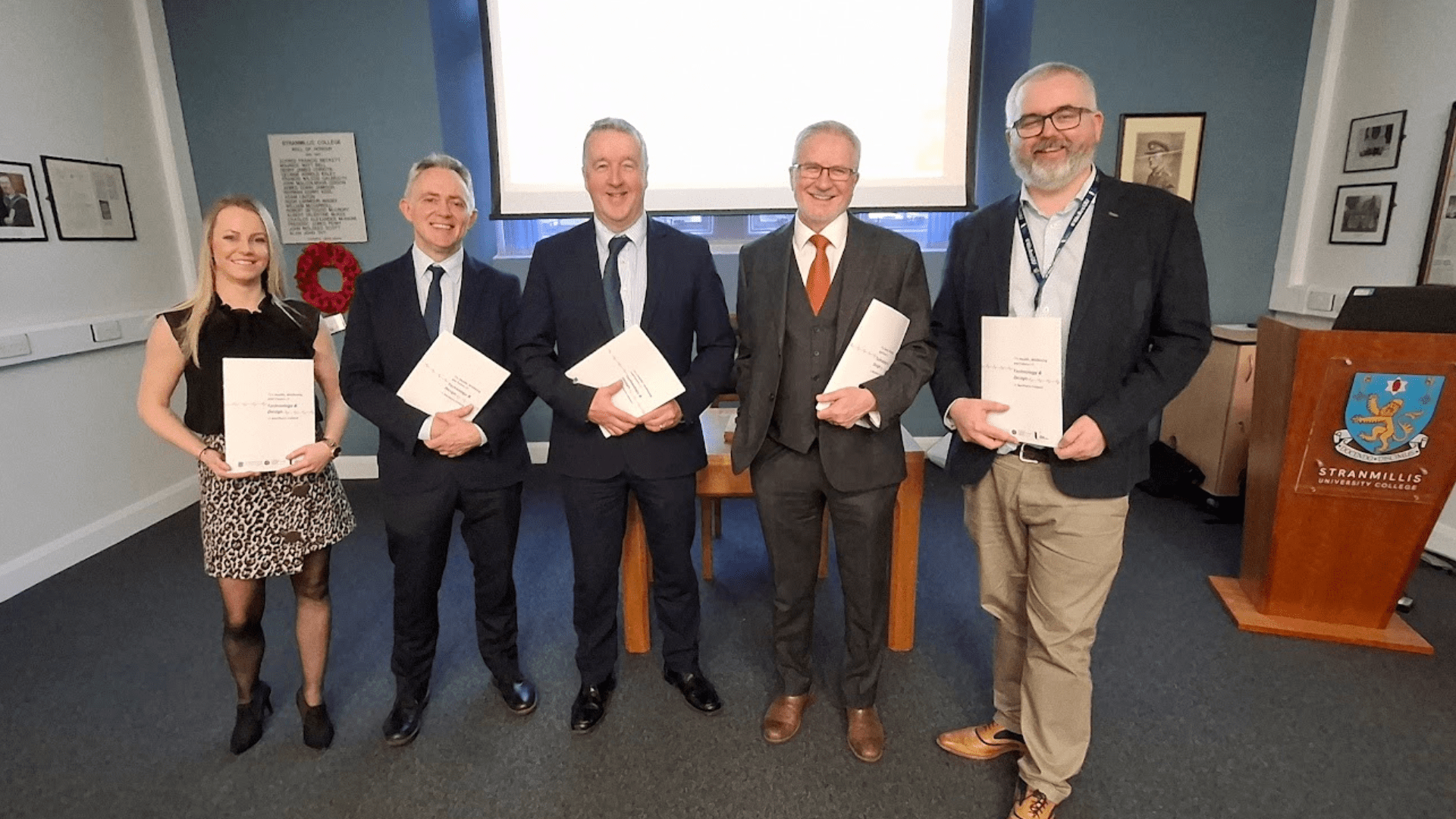
The report, launched this week at Stranmillis University College, brings together insights from educators, researchers and stakeholders across the education sector. It follows a conference hosted by Stranmillis in June 2025 which explored the current challenges and opportunities facing the subject. 

Produced by a consortium representing teacher education provision for Technology and Design in Northern Ireland – Stranmillis University College, St Mary’s University College and Ulster University – the report draws on engagement with teachers, schools and sector stakeholders to examine how the subject is evolving within the curriculum. 

The findings highlight Technology and Design’s unique ability to develop creativity, critical thinking and problem-solving, while also supporting pathways into key sectors of the economy including the trades, engineering and advanced manufacturing. 

However, the report also identifies a number of challenges currently facing the subject, including misconceptions about its value, resource disparities between schools and ongoing uncertainty around its identity within the curriculum. 

Key findings include: 

  • Unclear subject identity: Technology and Design is increasingly broad, with varying interpretations across schools. 
  • Recognition challenges: The subject is sometimes perceived as less important than traditional academic subjects. 
  • Resource pressures: Funding and equipment limitations affect the delivery of the subject in some schools. 
  • Gender imbalance: Participation remains male-dominated in some contexts. 
  • Influences on pupil choice: Timetabling, school policies and external perceptions all shape uptake. 

A central theme emerging from the conference was the potential of Project-Based Learning (PBL) to strengthen the subject.

Lead investigator Dr Michael Ievers said “By focusing on real-world challenges and collaborative problem-solving, PBL can help unify the diverse strands of Technology and Design while equipping pupils with the skills increasingly valued by employers.”

The report concludes that Technology and Design is uniquely positioned to connect education with real-world innovation and industry, and calls for renewed attention to its role within curriculum development and education policy in Northern Ireland. 

Download the full report here. 


“Blogging for Joy” – Dr Sharon Jones to lead creative writing workshop at Seamus Heaney HomePlace

Dr Sharon Jones, senior lecturer in Education Studies at Stranmillis University College, will lead a creative writing workshop, Blogging for Joy, at Seamus Heaney HomePlace on Saturday 7 March

Drawing on her experience as a writer and educator, Dr Jones will guide participants through the art of blogging, encouraging them to find and express the “marvellous in the ordinary” through words and images.  

Open to keen beginners, seasoned bloggers, and everyone in between, the informal, interactive session will include reflections on Dr Jones’s own blogging journey, opportunities to craft new content, and tips on thoughtful curation and creative communication.  

The workshop runs from 10.30 am to 1 pm. For booking and more information, visit the event page here. 

New study highlights urgent need for reform in post-19 transitions for young people with SEN in NI

A new mixed-methods study funded by EPIC Futures NI and UKRI has highlighted significant challenges facing young people with special educational needs (SEN) as they transition from full-time school education into further education, training, employment or day-care provision in Northern Ireland. 

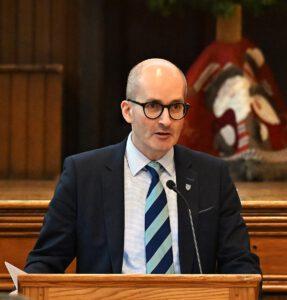
The research, led by Stranmillis University College’s Director of Research and Scholarship, Prof. Noel Purdy OBE, examined the range of post-school provisions currently available to young people with SEN, alongside the barriers, gaps and inconsistencies within the existing transition system. 

Drawing on evidence from young people, parents and carers, and professionals working across education and support services, the study found that post-19 transition pathways are often fragmented, unclear and insufficiently coordinated. 

Across all strands of the research, participants described a system that frequently fails to provide continuity, clarity or access to meaningful opportunities, leaving many young people and families struggling to navigate the move into adult life. 

The findings point to an urgent need for transformational change in how post-19 pathways are planned, delivered and evaluated. 

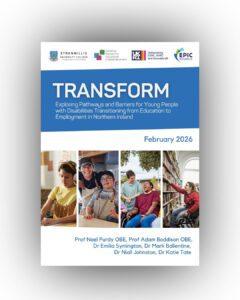
The report, entitled Transform: Exploring Pathways and Barriers for Young People with Disabilities, sets out five key recommendations to support more coherent and equitable transitions, including: 

  • the development of a single, live, centralised mapping system of provision 
  • legislative reform to introduce a statutory duty beyond age 19 
  • increased investment in existing services 
  • improved joined-up planning between government departments and agencies and a stronger commitment to listening to the voices of young people themselves. 

Overall, the study calls for a more coordinated and inclusive transition system that genuinely enables young people with SEN to thrive and achieve meaningful outcomes as they move into adult life. 

Download a copy of the report here.


Prof. Noel Purdy appointed to lead review of Religious Education in Northern Ireland

Prof. Noel Purdy OBE, Director of Research and Scholarship at Stranmillis University College, has been appointed to lead a major review of the Religious Education (RE) curriculum in Northern Ireland schools. 

The appointment was announced by Education Minister Paul Givan as part of a comprehensive response to a recent UK Supreme Court judgment on Religious Education and collective worship in schools. 

Professor Purdy will lead the Review of the RE Curriculum alongside vice-chair Mrs Joyce Logue, former Principal of Long Tower Primary School. They will be supported by an expert drafting group comprising teachers from primary and post-primary schools across all sectors. The review will also involve extensive engagement with churches, teachers, school leaders, parents and young people. 

The Minister confirmed that the review will develop a revised RE syllabus that is academically robust, modern in outlook and fully consistent with the Supreme Court ruling. Following a full public consultation, new regulations are expected to be brought forward in autumn 2026, with the revised syllabus implemented from September 2027. 

Commenting on his appointment, Professor Purdy welcomed the opportunity to lead the review.  

“I am delighted to lead this important review. Working collaboratively with stakeholders across Northern Ireland, I am confident we can develop an academically robust RE curriculum that prepares children and young people for life in modern society,” he said. 

Alongside the curriculum review, the Minister announced plans to introduce formal inspection of Religious Education across all schools, bringing RE into line with inspection arrangements for other curriculum subjects. 

New departmental guidance has also been published to strengthen and streamline parents’ right to withdraw their children from Religious Education or collective worship, ensuring the process is practical, effective and free from stigma. 

To find out more about the review, visit: https://tinyurl.com/yeusrbh5