Q: My decision is still ‘Pending’ on UCAS?
A: If your decision is still ‘Pending’ on UCAS, it is because either, we have not received all of your results from UCAS or because you did not meet the conditions of your offer.
If you have received all of your results and believe you have met the conditions of your offer, please email a scanned copy of your certificate(s) to registry@stran.ac.uk
While you wait for a decision to be made on your Firm Choice, you may wish to be considered for one of the Foundation Degree programmes offered by Stranmillis University College and delivered at our partner FE Colleges, please click here to register your interest. (Please note, there is only a small number of spaces available on these courses.)
https://www.smartsurvey.co.uk/s/CourseEnquiryForm2021/
You may also wish to consider other options in Northern Ireland while we make our decision on your application. Please visit the below links for further information:
https://www.qub.ac.uk/Study/Undergraduate/routes-to-university/
https://www.stran.ac.uk/routes-to-university/
Q: I am interested in one of your courses in Clearing, how do I apply?
A: If you would like to be considered for one of the Foundation Degree programmes offered by Stranmillis University College and delivered at our partner FE Colleges, please click here: https://www.smartsurvey.co.uk/s/CourseEnquiryForm2021/
A member of the Admissions team will assess your application against the availability of places and will be in touch with you over the coming days.
Q: I am on the Reserve List; how will I know if I get a place?
A: We are currently waiting on applicants who have been given an offer to accept or decline their place. If a space does become available on the course, then a member of the Admissions team will be in touch with you.
Q: I wish to withdraw my application; how do I do that?
A: You can use the Self-Release function on your UCAS Track. Alternatively, you can send an email to registry@stran.ac.uk and ask to have your application withdrawn. Please include your name, UCAS ID and course in the email and include if you wish to be released into Clearing or if you wish to withdraw from UCAS.
Q: I am appealing my grade, what do I need to do?
A: If you are appealing a grade, you must notify us of the result of the appeal before Wednesday 8th September. We will honour a remark until the 8th of September if you meet the original conditions of your offer. Beyond this date we are not obliged to consider remarks, but we will of course try to be as accommodating as possible if places are available. You should be aware that grades may go down as well as up following an appeal.
Q: I wish to defer my offer until next year, can I do that?
A: We do not accept deferred entry onto any of our courses. If you are wish to commence your studies in September 2022 then you will need to withdraw your application and reapply through UCAS next year.
If you have any questions about anything not covered above, please call Academic Registry on 028 9038 4263. This line will be open during the following times :
| Tuesday 10th August |
09.30 am – 4.00 pm |
| Wednesday 11th – Tuesday 17th August |
10.00 am – 3.00 pm |


 In light of the events in the past year, children’s mental health, and its relationship to physical activity, is more important than ever. The Daily Mile™ is a UK-wide initiative which gets children out of the classroom for 15 minutes every day, to run or jog at their own pace. Whilst making them fitter, healthier and able to concentrate in the classroom, it has huge social and emotional benefits too.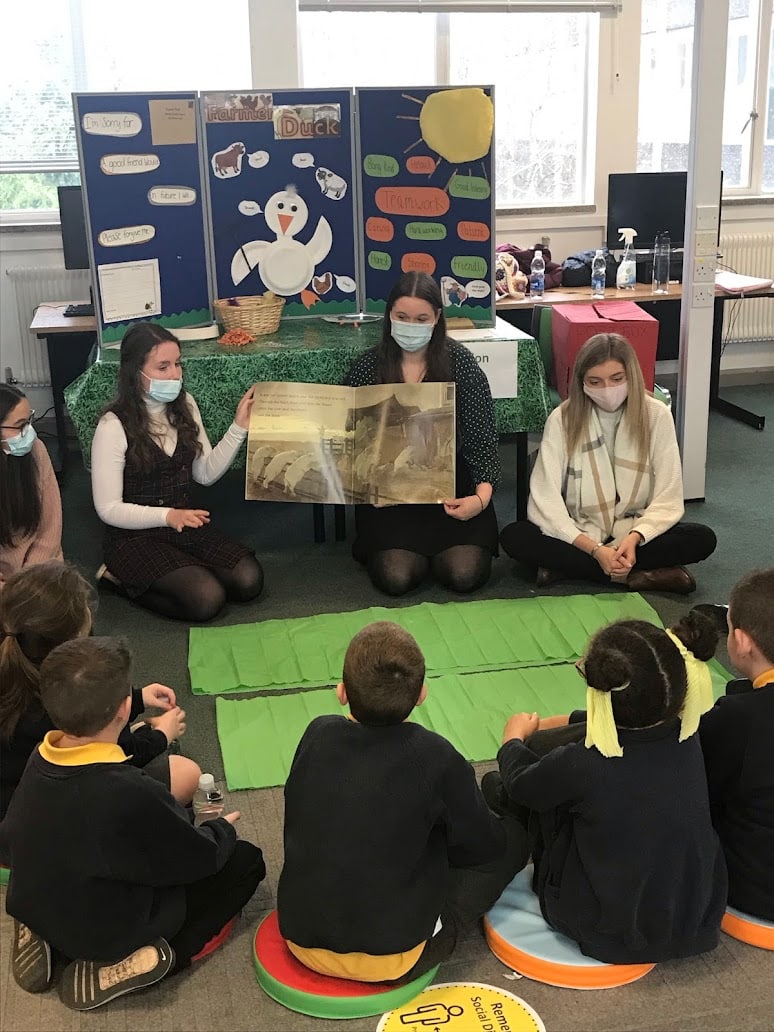
 Books literally came alive at Stranmillis College today. The College hosted a wonderful shared experience with our student teachers supporting literacy in our community and was delighted to welcome Abbots Cross Primary School onto the campus. The Books Alive Reading Hubs initiative is part of the College’ widening participation programme to support and raise aspirations for Access to Higher Education for all.